
The fate of DNA in scientific research
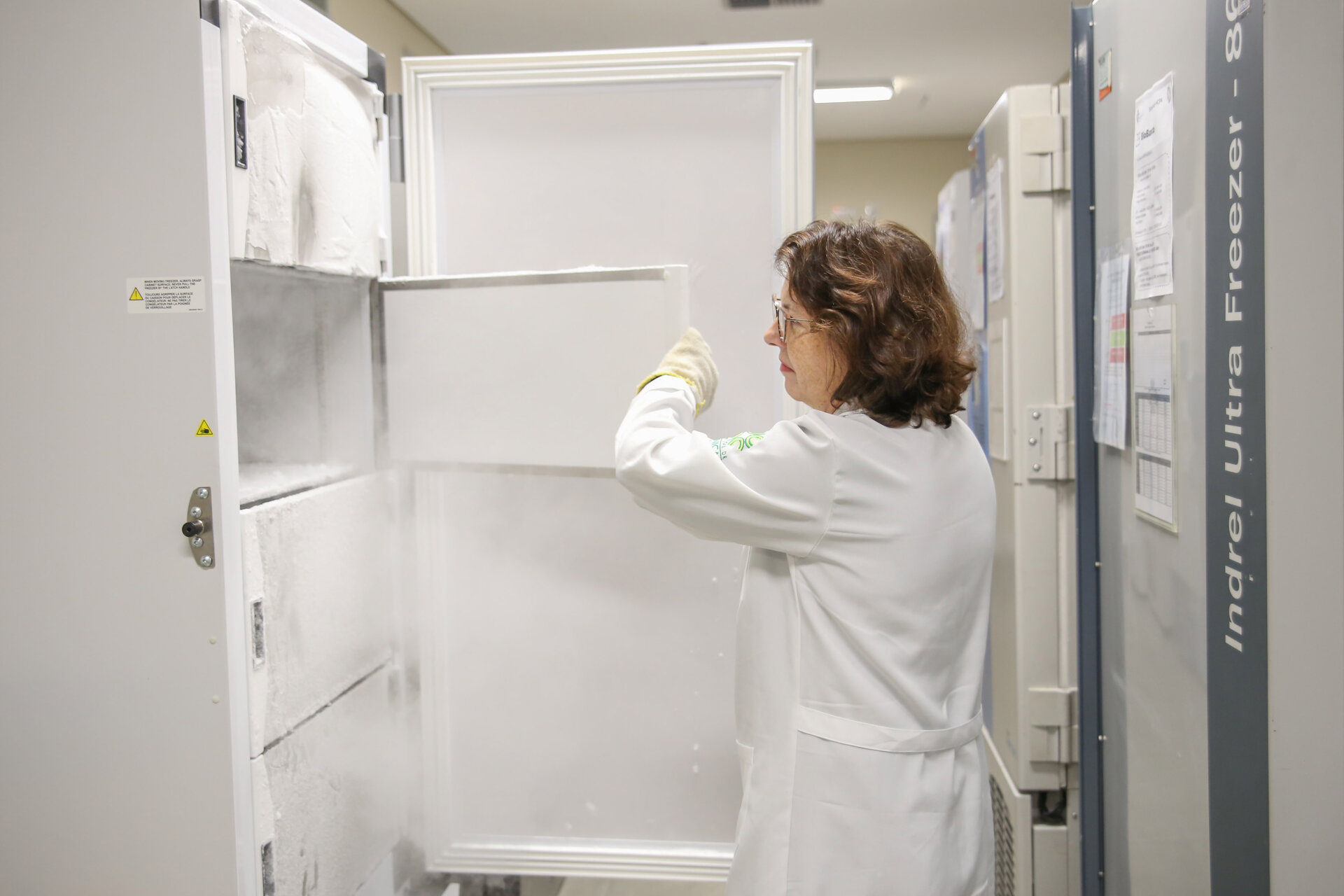
With the advancement of genomic research, biobanks have become central to the development of new medicines, more accurate diagnoses and personalized medicine strategies. At the same time, the storage of genetic information raises a sensitive question: who truly owns this data and how to ensure that scientific progress does not violate fundamental rights.
For Fernanda Sales Luiz Vianna, associate professor at the Department of Genetics at UFRGS and researcher at the Immunogenetics Laboratory at UFRGS and the Genomic Medicine Laboratory at HCPA, the idea of genetic property needs to be analyzed carefully. "From an ethical point of view, the concept of property can be understood as authority for decision-making. The individual, as owner of their own body, has control and decision-making power over their genetic information", he explains.
OWNERSHIP - However, this information does not just concern a single person. "Genetic information has a relational character, as we share approximately half of our DNA with first-degree relatives. This means that it also concerns family members", says the researcher, highlighting that genetic data can be seen as a form of shared property.
In Brazil, the legislation is clear regarding the ownership of genetic information. According to Vianna, “every sample, data or information stored in biobanks belongs to the participant who authorized its use”. Unlike the donation logic, adopted in other contexts, Brazilian biobanks act as guardians of samples. Even when the participant authorizes broad use, ownership remains with the person who provided the biological material.
SECURITY - Ensuring the security of this information is one of the main challenges. At the Biobank of the Hospital de Clínicas de Porto Alegre, a series of technical and organizational measures seek to reduce risks and protect the privacy of participants. “The samples and data go through coding and pseudonymization processes since collection, with identification between identifiable information”, explains Vianna. Each participant receives different codes for data and samples, and only an extremely restricted number of professionals have access to the identification key.
Access to information is also strictly controlled. Physical storage areas and digital bases have limited access profiles, and any use by researchers depends on prior approval of projects by governance bodies and research ethics committees. “This ensures that the use of genetic data occurs ethically, safely and in line with the principles of respect for participants”, he states.
CONSENT - Another point under debate is the informed consent model. For the researcher, the traditional format no longer fully meets the needs of genomic research. “There is a growing consensus that specific, timely consent is insufficient for long-term research and ongoing data reuse,” he says. In biobanks, broader models have been adopted, in which the participant can decide whether or not they wish to be re-contacted for each new study.
This type of consent, however, requires more robust safeguards. “The broader the consent, the higher the level of governance, transparency and institutional control must be”, highlights Vianna, highlighting the role of independent committees in the ethical and scientific evaluation of projects.
The risks of misuse of genetic information are real. Genetic data reveals not only current characteristics, but also future risks of disease, including for family members. “Even when the data isanonymized siderates, DNA is a very powerful identifier, which makes re-identification possible through crossing with other bases”, warns the researcher.
LGPD - The General Personal Data Protection Law recognizes this sensitivity and classifies genetic data as sensitive personal data, requiring a higher level of protection. Still, there are practical challenges. “The LGPD values well-defined purposes, while biobanks exist precisely to allow future research that cannot yet be fully predicted”, explains Vianna. Therefore, in addition to complying with the law, it is essential to continually invest in governance, information security and ethical supervision.
For the researcher, the debate should not be seen as a choice between science and privacy. “Scientific advancement is only socially legitimate when it respects the fundamental rights of the people who make this research possible”, he states. It advocates a model based on institutional trust, in which transparency, responsible consent and solid governance structures allow the collective interest and the individual right to genetic privacy to coexist in a legitimate and sustainable way.