
“The Ministry of Health is committed to transforming the reality of people with rare diseases in Brazil”, guarantees Alexandre Padilha
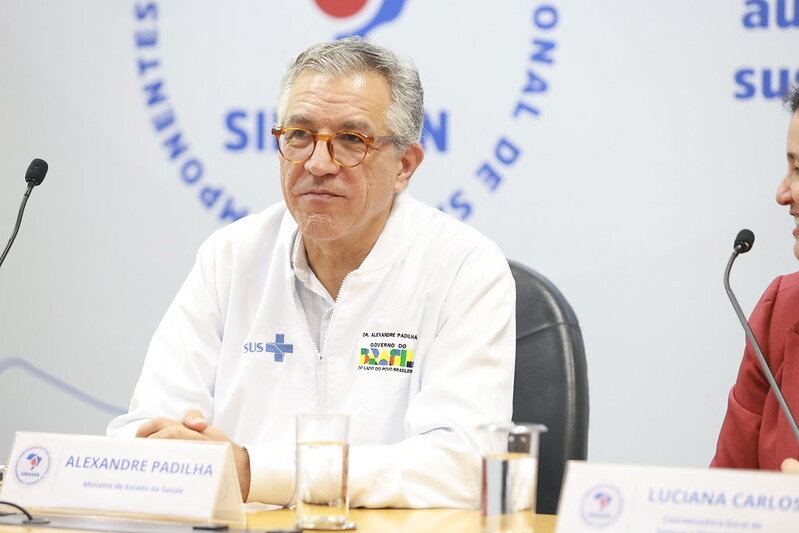
RARE CONNECTIONS - Minister, Brazil has advanced in the incorporation of medicines and technologies for rare diseases, but there are still large gaps in early diagnosis and equitable access, especially in the North and Northeast regions. What are the Ministry of Health's priorities for 2026 with regard to expanding and decentralizing the diagnosis of these diseases?
MINISTER PADILHA - First, I wanted to thank you for this opportunity to talk about such an important topic. The Ministry of Health is committed to transforming the reality of people with rare diseases in Brazil and, fortunately, we have made many advances in this policy. In the last three years, we have enabled 28 new services focused on rare diseases in all regions of the country. In 2022, the SUS had 23 services; currently there are 51. That means more diagnosis, more treatment and more care close to where people live.
In terms of diagnosis, we expanded the National Neonatal Screening Program and were able to perform the heel prick test on 82% of newborns. The new thing is that we have started to offer complete exome sequencing in the SUS, a high-precision test that allows rare genetic changes to be identified more quickly and safely. With this exam, the results may be available within six months. Two laboratories will meet the entire national demand: that of the National Institute of Cardiology, already in operation, and that of Fiocruz, expected to begin carrying out tests in May. Both are located in Rio de Janeiro, but will receive collection material from across the country. We know that early diagnosis makes a difference in the lives of families, often avoiding unnecessary suffering.
For this year, our focus is on reducing regional inequalities. We agreed on a 30% increase in the budget allocated to qualifying Neonatal Screening Reference Services in the states and strengthening the logistics for transporting samples from the National Neonatal Screening Program (PNTN). Through a contract signed with the Post Office, the Ministry of Health will guarantee the transport of samples in Brazilian cities, making it possible to reduce the average delivery time of diagnoses by half. Five macro-regional reference centers are also being created, organized to serve several states, ensuring greater scale and speed of results. In the coming years, we will incorporate new technologies and clinical protocols, train teams, certify laboratories and consolidate regional screening centers.
RARE CONNECTIONS - The judicialization of health is still a constant reality for patients with rare diseases in Brazil. What does the government intend to do to reduce the need to resort to the Judiciary to obtain medicines, tests or treatments that are often essential for the survival of these patients?
MINISTER PADILHA - The Ministry of Health has been working to ensure that access to medicines, tests and treatments takes place in a planned manner within the SUS, without citizens having to resort to the Judiciary. The General Coordination of Rare Diseases has been working very closely with the National Commission for the Incorporation of Technologies into the Unified Health System (Conitec) to include the specificities of these groups in analyzes of the incorporation of new technologies.
In this way, we were able to increase the number to 64number of Clinical Protocols and Therapeutic Guidelines (PCDT) aimed at rare diseases. These protocols do not just deal with medications, but with an entire multidisciplinary and comprehensive networked care. We also facilitated the Risk Sharing Agreement (ACR) for the availability of Zolgensma, a medication used to treat patients with Spinal Muscular Atrophy (SMA). This gave us more strength to dialogue with the Judiciary, based on clinical evidence and with the support of researchers, to challenge other judicializations — some involving medications that cost almost twice as much as Zolgensma. We have a technical cooperation agreement with the National Council of Justice and the Judiciary, which play a positive role in tackling the issue of judicialization in the country. This is still a challenge that requires permanent care.
RARE CONNECTIONS - In relation to the SUS, many specialists and families report difficulties in accessing reference centers and trained professionals. Are there concrete plans to strengthen the care network for people with rare diseases within the public health system? Are there plans to create new centers or train multidisciplinary teams?
MINISTER PADILHA - In February, we announced the expansion of the SUS specialized network for the care of people with rare diseases. We will increase this network by 120%, with an investment of R$44 million to enable 11 new services in four regions of the country. With this, Brazil now has 51 specialized services in public and philanthropic hospitals. To give you an idea, in 2022 the SUS had only 23 services. We will more than double the existing network and consolidate the largest public network for the diagnosis and care of rare diseases in the world. We are also investing in training health professionals and publishing updated technical notes, which guide and standardize the performance of services. This is essential to guarantee quality, safety and uniformity in the care provided throughout the national territory.
RARE CONNECTIONS - Minister, how do you assess the role of civil society organizations, such as APAEs and Casa dos Raros, in supporting the State in caring for people with rare diseases? Is there any public policy proposal that involves these institutions in a more systematic way, whether through partnerships, agreements or direct funding?
MINISTER PADILHA - These institutions are strategic partners of the Ministry of Health, mainly in terms of a humanized perspective and strengthening the support network for families. We are working on collaborative action, together with states and municipalities, to formalize these institutions as an integral part of the Care Networks for People with Rare Diseases. There are several APAEs, for example, working with reference services in rare diseases or neonatal screening. Their participation in social control bodies, contributing to the formulation of public policies and decision-making, is also fundamental. The objective is to weave a truly comprehensive and seamless care network, in which both the State, in its role as universal guarantor, and civil society organizations, in their power of specialized and community action, work side by side so that no person with a rare disease is left unassisted.
RARE CONNECTIONS - The regulation and financing of clinical research for rare diseases in Brazil are still challenging. Does the Ministry of Health intend to strengthen mechanisms to encourage scientific research and innovation focused on this field, including in collaboration with universities, startups and national laboratories?
MINISTER PADILHA - The Ministry of Health is committed to consolidating Brazil as a reference hubence for clinical research, including rare diseases. The new legal framework for clinical research (Law nº 14,874/2024) offers legal certainty and ethical agility to attract investments and expand studies in the country. This year, we will launch the National Clinical Research Program to train health professionals and researchers, increase the number of centers suitable for good practices and encourage integration between university hospitals, regional networks and SUS units in less assisted areas. On the other hand, we have an agreement with the National Center for Research in Energy and Materials (CNPEM), in Campinas, to provide laboratory infrastructure, technological platforms and training designed to accelerate the development of disruptive therapies and national technologies.
RARE CONNECTIONS - The National Program for Rare Diseases, established by Ordinance nº 199/2014, completed a decade in 2024. What is your assessment of the effectiveness of this policy so far, and what reformulations or updates are being considered to adapt it to the current demands of the Brazilian rare population?
MINISTER PADILHA - This is a fundamental milestone for the recognition and organization of care for people with rare diseases. In these 10 years, SUS has increased access to diagnosis, treatment and comprehensive care, at the same time as it has structured a network of specialized services. But let's go even further: in this administration, we implemented the Technical Advisory Chamber (CTA) for Rare Diseases, whose main objective is to improve the policy and discuss topics related to pathologies. It is a group that brings together representatives from various technical areas, academic, scientific and health care institutions, as well as representatives from organized civil society.
RARE CONNECTIONS - Finally, minister, what is your message to Brazilian families who live with the daily challenge of a rare or ultra-rare disease, often invisibly, and who fight tirelessly for dignity, care and recognition?
MINISTER PADILHA - I want to tell Brazilian families living with rare or ultra-rare diseases that the Ministry of Health recognizes the daily challenges you face and the importance of the fight for dignity, care and recognition. We have been working to strengthen the care network, expand access to diagnosis and treatments, qualify specialized services and incorporate technologies that can improve your lives. The Ministry prioritizes not only the incorporation of medicines, but also the establishment of a structured line of care, ensuring safety and comprehensive monitoring of patients throughout the SUS network. Our commitment is that no family feels invisible and that everyone has access to the comprehensive care they deserve.