
Rarity and work: the challenge of being an adult and productive despite the diagnosis
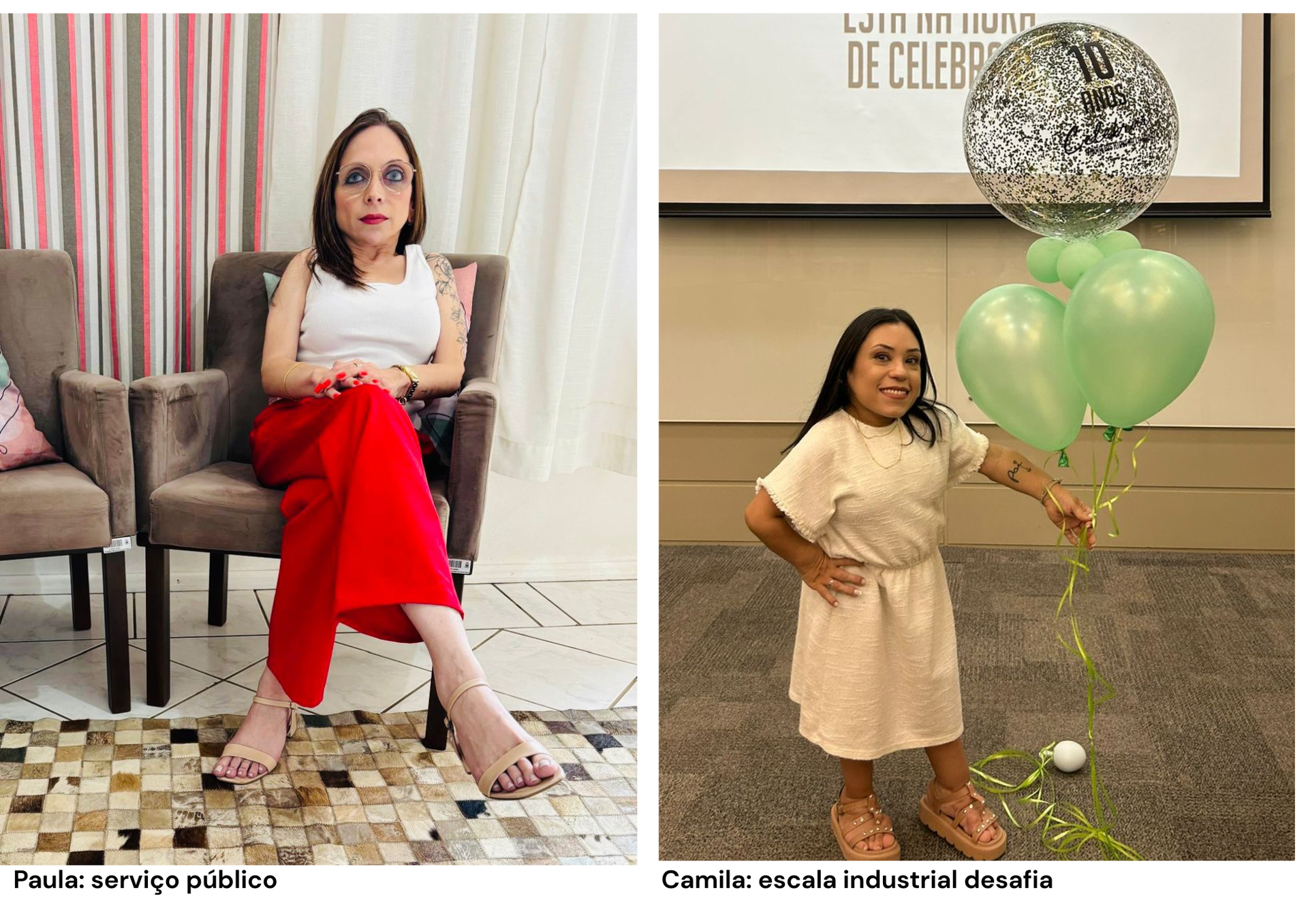
For those living with a rare disease, the transition to adulthood raises questions that go far beyond clinical issues: how to guarantee a livelihood and build a career in a market that prioritizes linear productivity? In the south of the country, women like Paula Geib, resident in Santa Rosa (RS), and Camila Rosalino, from Criciúma (SC), face the complex engineering of reconciling treatments, health routines and professional demands.
STABILITY - Paula Geib, 38 years old, psychologist, found in the public competition the way out of the ghost of dismissal that haunted her in the private sector. "I was afraid of being fired for the simple fact of having a rare disease", reveals Paula, who lives with Type 1 Scheie Syndrome. Camila Rosalino, 33 years old, followed a path of persistence in the private sector. Working in a fashion manufacturing industry for ten years, Camila graduated in Psychology in 2023, proving that career progression is possible, although the market is still exclusionary. Camila lives with Mucopolysaccharidosis Type IVa and highlights that the common work schedule in the industrial sector (6x1) is rarely compatible with medical monitoring, which often takes place outside her city.
ABILITISM - Prejudice in the workplace manifests itself in everyday ableism. Camila points out that exclusion occurs when events are planned without accessibility or when people with a rare disease are left out of decision-making spaces. "These situations send the message that that person is not considered fully part of the group", he explains. Paula adds that prejudice affects self-esteem in a cruel way, generating anxiety and loss of initiative. "I believed that I was creating that whole situation", says the psychologist.
CHANGES - The interviewees agree that the solution does not involve romanticizing overcoming, but through structural changes. Paula defends that accessibility and compliance with quotas for PWDs are mandatory under penalty of heavy fines. Camila reinforces the need to prepare leaders and strengthen social protection policies. She points out that the base salary rarely covers the costs of specialized treatments and criticizes the lack of technical knowledge in social security expertise. "The difficulty in granting aid can lead to the denial of rights in times of greater vulnerability", warns Camila. Aging with a rare condition requires a system that recognizes that an individual's functionality is not nullified by their pathology, but by the barriers that society maintains.